
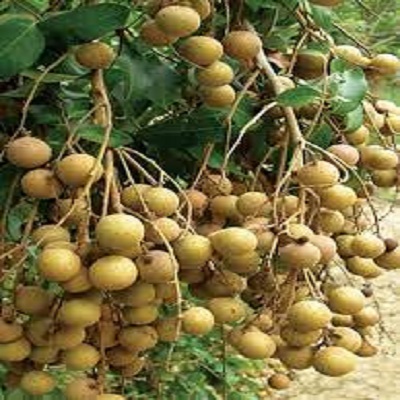
Diamond River Longan Fruit Plant-Grafted(Fruiting in 1 Year)
$ 19.00
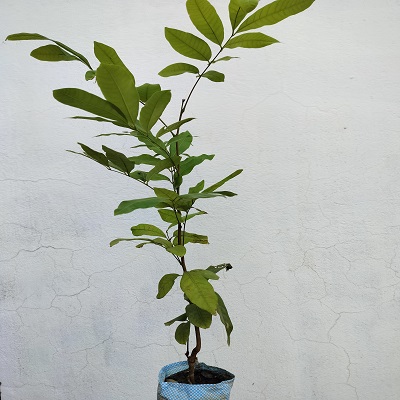
- Longan: The Tree with the Dragon’s Eyes. He is not Lychee but his brother… Dimocarpus longan, commonly known as the longan is a tropical tree species that produces edible fruit. It is one of the better-known tropical members of the soapberry family Sapindaceae, to which the lychee and rambutan also belong. The fruit of the longan is similar to that of the lychee, but less aromatic in taste. It is native to tropical Asia and China. The longan, is so named because it resembles an eyeball when its fruit is shelled (the black seed shows through the translucent flesh like a pupil/iris). The seed is small, round and hard, and of an enamel-like, lacquered black. The fully ripened, freshly harvested fruit has a bark-like shell, thin, and firm, making the fruit easy to peel by squeezing the pulp out as if one were “cracking” a sunflower seed. When the shell has more moisture content and is more tender, the fruit becomes less convenient to shell. The tenderness of the shell varies due to either premature harvest, variety, weather conditions, or transport/storage conditions. Longan trees prefer sandy soil. While the species prefers temperatures that do not typically fall below 4.5 °C (40 °F), it can withstand brief temperature drops to about -2 °C (28°F). Longans usually bear fruit slightly later than lychees. The fruit is sweet, juicy and succulent in superior agricultural varieties and, apart from being eaten fresh, is also often used in Asian soups, snacks, desserts, and sweet-and-sour foods, either fresh or dried, sometimes canned with syrup. The taste is different from lychees; while longan have a drier sweetness, lychees are often messily juicy with a more tropical, sour sweetness. The seed and the shell are not consumed. Dried longan are often used in Chinese cuisine and Chinese sweet dessert soups. In Chinese food therapy and herbal medicine, it is believed to have an effect on relaxation. In contrast with the fresh fruit, which is juicy and white, the flesh of dried longans is dark brown to almost black.
- Brand
- Need this Tool Customized?
Brand
LMT
Need This Tool Customized?
Every machining application is different. If this tool is close to what you need but not an exact fit, General Cutting Tools can help modify it for your specific job, machine, material, or production requirement.
We work with CNC shops, industrial manufacturers, tool rooms, and production facilities to provide tool modifications that improve fit, function, performance, and efficiency. Whether you need a small adjustment or a more specialized cutting tool solution, our team can review your requirements and recommend the best option.
Custom tool modifications can help reduce setup time, improve accuracy, extend tool life, solve clearance issues, and support more consistent production results.
Common Tool Customization Options
Diameter and OD Modifications
We can modify tool diameters to better match your application requirements, including cutting diameter changes, OD modifications, pilot diameter adjustments, step diameters, and shank diameter modifications.
Bore Modifications for Saw Blades
Custom saw blade bore modifications are available for hole diameter changes, pinholes, mounting holes, and keyway cutouts to help match your machine setup and cutting requirements.
Length Adjustments
Tools can be modified for specific reach, clearance, or setup needs. This may include overall length changes, flute length adjustments, reduced neck sections, extended reach designs, or shortened tools for improved rigidity.
Shank Modifications
Shank modifications can help ensure the tool fits properly in your holder, spindle, or machine setup. Common options include shank diameter changes, flats, Weldon flats, reduced shanks, and custom holding requirements.
Radius, Chamfer, and Corner Changes
We can customize corner radius, chamfer angles, edge breaks, and other profile details to meet part print requirements or improve cutting performance.
Step Tool Modifications
For applications that require multiple diameters or operations in a single tool, we can create or modify step tools to help reduce tool changes and improve production efficiency.
Flute and Cutting Edge Adjustments
Depending on the tool and application, flute length, cutting edge geometry, end cutting features, relief angles, and cutting edge shape may be modified to improve chip evacuation, cutting action, and tool performance.
Regrinding and Resharpening
Many cutting tools can be reground or resharpened to restore performance, extend tool life, and reduce replacement costs.
Custom Profiles and Special Forms
For unique part features, we can help provide special forms, custom profiles, custom radii, counterbores, countersinks, keyseat cutters, form tools, and other application-specific tooling solutions.
Material-Specific Tool Adjustments
We can help modify or recommend tooling based on the material being machined, including aluminum, brass, bronze, plastics, stainless steel, hardened steel, cast iron, composites, and other industrial materials.
Have a Drawing, Sample, or Part Print?
Send us your print, sketch, CAD file, photo, tool number, sample, or application details. For the fastest quote, include the material being cut, quantity needed, required dimensions, tolerances, and any machine or holder requirements.
Coating Options
Tool coatings can be selected or added to improve wear resistance, heat resistance, lubricity, and performance in specific materials such as steel, stainless steel, aluminum, cast iron, and high-temperature alloys.
Request a Custom Tool Modification
Need this tool changed for your application? Contact General Cutting Tools today to discuss your custom tooling needs. We can help you find the right solution for your machine, material, and production goals.
Related products
Adjustable Milling System
$ 3.14
Adjustable Milling System
$ 2.43
Adjustable Milling System
$ 8.61
Adjustable Milling System
$ 2.95
Adjustable Milling System
$ 2.60
Adjustable Milling System
$ 4.24
Adjustable Milling System
$ 5.68
Adjustable Milling System
$ 4.04