
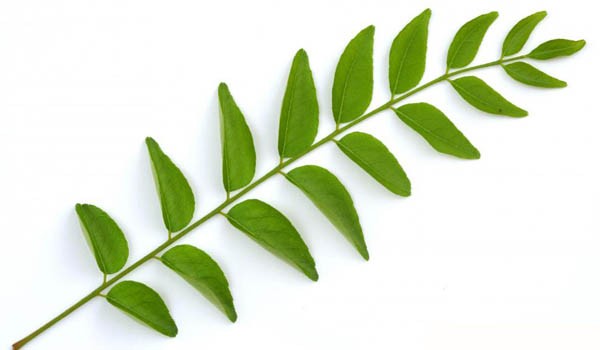
Curry Leaf/Limro Tree
$ 95.56
- This item is DiscontinuedCommon name: Curry Leaf, Limro Botanical name: Murraya koenigii Family: Rutaceae Origin: India, Ceylon Avg Height X Width: 12' x 10' Damage temp: 28-30 F Curry Leaf/Limro Tree in a 3 gallon container. The curry leaf plant, is a native of Tropical Asia, southern India and Sri Lanka. Belonging to the Rutaceae family, the Murraya Koenigi plant grows to a height between 2 and five meters, depending on various factors. The leaves are small, pointed and in clusters, giving of a strong aroma faintly reminding one of citrus and anise. The aroma is delightful when added to curries and while frying spices, and lends that extra something to south Indian dishes. It also has many medicinal uses and is an anti-carcinegine as well as anti-oxidant. Can easily be kept in a container for easy access. Description Uses Medicinal Uses Curry leaf (Murraya koenigii Spreng., Rutaceae), is a popular leafy-spice used in Asian-Indian cuisine for its characterizing authentic flavor and distinct aroma (Fig. 1). The curry leaf is used by Asian Americans originating from South Asia almost daily in its fresh form when available and is preserved as dried or frozen for long-term storage. Interest in greater use of curry leaf has been stimulated since its high antioxidant and anticarcinogenic potential were reported (Khan et al. 1997; Khanum et al. 2000), as well as the changing demographics nationwide that have created a ready market and greater demand for this spice (Palaniswamy 2001). Family: Rutaceae English name: Curry leaf-tree Indian names: karepaku (Andhra Pradesh); narasingha, bishahari (Assam); barsanga, kartaphulli (Bengal); gorenimb, kadhilimbdo (Gujrat); mitha neem, gandhla, gandhela, gandhelu (Himachal Pradesh); kathnim, mitha neem, kurry patta gandhela, barsanga (Hindi); karibeva (Karnataka); kariveppilei (Kerala); gandhela, gandla, gani (Kumaon); bassan, basango, bhursanga (Orissa); surabhinimba, kalasaka, mahanimb (Sanskrit); karivempu, karuveppilei (Tamilnadu) Murraya koenigii (L.) Spreng. is commonly found in the outer Himalayas, from the Ravi eastwards, ascending to 5,000 feet, in Assam, Chittagong, Upper and Lower Burma. It is also found in evergreen and deciduous forests of peninsular India, often as underwood (Brandis, 1906). The shrub is of common occurrence in Himachal Pradesh in areas lying between 800 and 1,450 metres above the sea level. Almost every part of this plant has a strong characteristic odour. The people of the plains, particularly of southern India, use the leaves of this plant as a spice in different curry preparations. Description almost black, somewhat jelly-like pulp, soft, sr. In the center, there may be 1 to 10 flat, smooth, brown seeds, 3/4 to 1 in (2-2.5 cm) long, but the fruits are often seedless. A small spreading shrub, about 2.5 metres high; the main stem, dark green to brownish, with numerous dots on it; its bark can be peeled off longitudinally, exposing the white wood underneath; the girth of the main stem is 16 cm. Leaves, exstipulate, bipinnately compound, 30 cm long, each bearing 24 leaflets, having reticulate venation; leaflets, lanceolate, 4.9 cm long, 1.8 cm broad, having 0.5-cm-long petiole. Flowers, bisexual, white, funnel-shaped, sweetly scented, stalked, complete, ebracteate, regular, actinomorphic, pentamerous, hypogynous, the average diameter of a fully opened flower being 1.12 cm; inflorescence, a terminal cyme, each bearing 60 to 90 flowers; calyx, 5-lobed, persistent, inferior, green; corolla, white, polypetalous, inferior, with 5 petals, lanceolate; length, 5 mm; androecium, polyandrous, inferior, with 10 stamens, dorsifixed, arranged into circles of five each; smaller stamens, 4 mm. long whereas the longer ones, 5 to 6 mm; gynoecium, 5 to 6 mm long; stigma, bright, sticky; style, short; ovary, superior. Fruits, round to oblong, 1.4 to 1.6 cm long, 1 to 1.2 cm in diameter; weight, 880 mg; volume, 895 microlitres; fully ripe fruits, black with a very shining surface; pulp, Wistaria blue 640/2; the number of fruits per cluster varying from 32 to 80. Seed, one in each fruit, 11 mm long, 8 mm in diameter, colour spinach green 0960/3; weight, 445 mg; volume, 460 microlitres Flowering starts from the middle of April and ends in the middle of May. The peak flowering season under the Sanwara (H.P.) conditions was observed to be the last week of April. The fruiting season was observed to continue from the middle of July to the end of August. The peak fruiting season, however, was found to continue from the last week of July to the 1st week of August Uses The shiny-black fruits are liked both by children and adults. As revealed by the chemical composition of the fruits, they are very nutritious. The leaves are used as a spice in different curries and impart a very good flavour to the preparations. These fruits have also many medicinal properties. The branches of Murraya koenigii (L.) Spreng. are very popular for cleaning the teeth as datun and are said to strengthen the gums and the teeth. This plant is quite ornamental due to its compound leaves. It can, therefore, be used as a hedge and as an ornamental shrub. Medicinal_Uses The leaves, the bark and the roots of Murraya koenigii (L.) Spreng. can be used as a tonic and a stomachic. The bark and the roots are used as a stimulant by the physicians. They are also used externally to cure eruptions and the bites of poisonous animals. The green leaves are stated to be eaten raw for curing dysentery, and the infusion of the washed leaves stops vomiting. A strong odiferous oil occurs in the leaves and the seeds of Murraya koenigii (L.) Spreng. The chemical examination of this oil has been made by Nigam and Purobit (1961). Gautam and Purobit (1974) reported that this essential oil exhibited a strong antibacterial and antifungal activity. An alkaloid, murrayacinine, is also found in this plant.
- Brand
- Need this Tool Customized?
Brand
LMT
Need This Tool Customized?
Every machining application is different. If this tool is close to what you need but not an exact fit, General Cutting Tools can help modify it for your specific job, machine, material, or production requirement.
We work with CNC shops, industrial manufacturers, tool rooms, and production facilities to provide tool modifications that improve fit, function, performance, and efficiency. Whether you need a small adjustment or a more specialized cutting tool solution, our team can review your requirements and recommend the best option.
Custom tool modifications can help reduce setup time, improve accuracy, extend tool life, solve clearance issues, and support more consistent production results.
Common Tool Customization Options
Diameter and OD Modifications
We can modify tool diameters to better match your application requirements, including cutting diameter changes, OD modifications, pilot diameter adjustments, step diameters, and shank diameter modifications.
Bore Modifications for Saw Blades
Custom saw blade bore modifications are available for hole diameter changes, pinholes, mounting holes, and keyway cutouts to help match your machine setup and cutting requirements.
Length Adjustments
Tools can be modified for specific reach, clearance, or setup needs. This may include overall length changes, flute length adjustments, reduced neck sections, extended reach designs, or shortened tools for improved rigidity.
Shank Modifications
Shank modifications can help ensure the tool fits properly in your holder, spindle, or machine setup. Common options include shank diameter changes, flats, Weldon flats, reduced shanks, and custom holding requirements.
Radius, Chamfer, and Corner Changes
We can customize corner radius, chamfer angles, edge breaks, and other profile details to meet part print requirements or improve cutting performance.
Step Tool Modifications
For applications that require multiple diameters or operations in a single tool, we can create or modify step tools to help reduce tool changes and improve production efficiency.
Flute and Cutting Edge Adjustments
Depending on the tool and application, flute length, cutting edge geometry, end cutting features, relief angles, and cutting edge shape may be modified to improve chip evacuation, cutting action, and tool performance.
Regrinding and Resharpening
Many cutting tools can be reground or resharpened to restore performance, extend tool life, and reduce replacement costs.
Custom Profiles and Special Forms
For unique part features, we can help provide special forms, custom profiles, custom radii, counterbores, countersinks, keyseat cutters, form tools, and other application-specific tooling solutions.
Material-Specific Tool Adjustments
We can help modify or recommend tooling based on the material being machined, including aluminum, brass, bronze, plastics, stainless steel, hardened steel, cast iron, composites, and other industrial materials.
Have a Drawing, Sample, or Part Print?
Send us your print, sketch, CAD file, photo, tool number, sample, or application details. For the fastest quote, include the material being cut, quantity needed, required dimensions, tolerances, and any machine or holder requirements.
Coating Options
Tool coatings can be selected or added to improve wear resistance, heat resistance, lubricity, and performance in specific materials such as steel, stainless steel, aluminum, cast iron, and high-temperature alloys.
Request a Custom Tool Modification
Need this tool changed for your application? Contact General Cutting Tools today to discuss your custom tooling needs. We can help you find the right solution for your machine, material, and production goals.
Related products
Adjustable Milling System
$ 2.24
Adjustable Milling System
$ 3.28
Adjustable Milling System
$ 3.14
Adjustable Milling System
$ 8.42
Adjustable Milling System
$ 4.04
Adjustable Milling System
$ 2.95
Adjustable Milling System
$ 4.10
Adjustable Milling System
$ 7.10