
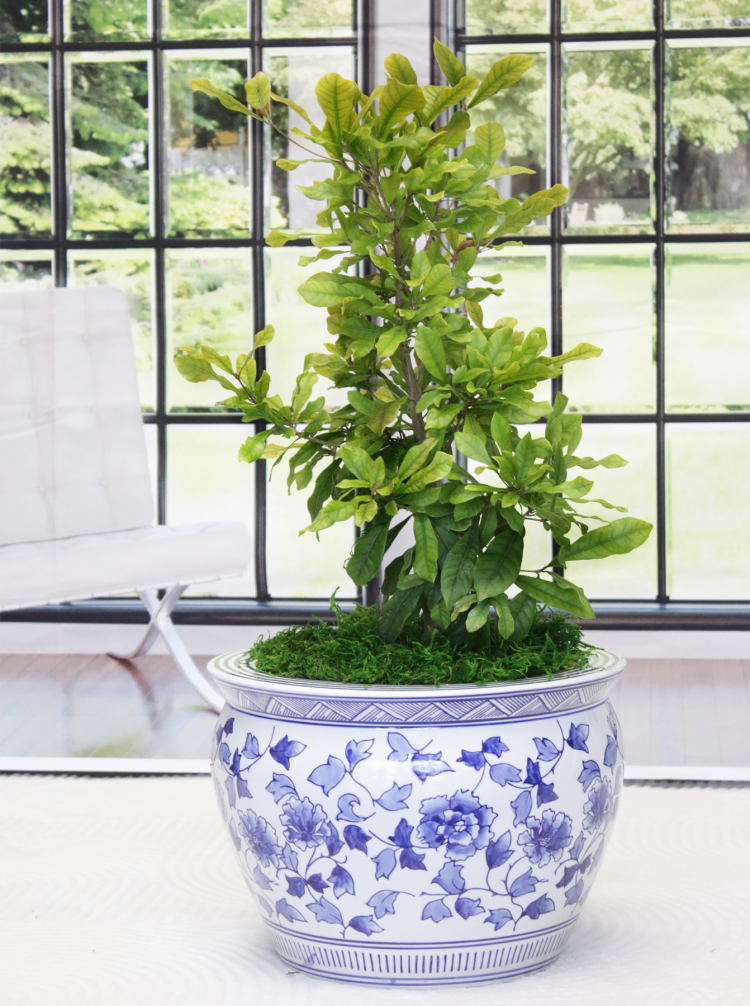
Miracle Fruit Tree
$ 90.20
- Miracle Fruit tree in 3 gallon container. These are the fruits seen on Bravo's Real Housewives of Atlanta, CNN, New York Times. After eating just one of these miracle fruits, almost everything will taste sweet including lemons, limes, tomatoes, vinegar, hot sauce, etc for up to 2 hours after eating just one fruit. See this red berry in action on the Hallmark Channel Lemons taste like sweet lemonade Guinness Stout beer tastes like chocolate milk Even broccoli and cauliflower taste like sweet apple Mothers use them to introduce new vegetables to their children They're a great tool for anyone looking to increase their calorie intake Some like to throw Miracle Berry parties, where everyone samples a variety of foods They make for a unique, thoughtful gift These fruit have an enzyme which coat your tongue and prevent the sour taste. The fruit are also used by chemotherapy patients to mask the metallic taste experienced after cancer treatment and is used to stimulate appetite. These fruit retail for between $4-$10 a piece, you can now own your very own fruiting plant for the price of just a couple of fruit. These plants can be container grown and will produce fruit almost year round if kept warm. Common Names Origin Adaptation Description Foilage Flower Fruit Location Soil Irrigation Fertilization Pruning Propagation Pests and Diseases Commercial Potential Cultivars Common Names Miracle Fruit, Miracle Berry Origin Tropical west Africa. Adaptation Coming from hot, wet tropical lowlands, the plant is intolerant of frost and should be considered a container plant except in southern Florida and Hawaii. Older plants can survive a light frost but it is best to avoid it if possible. Miracle fruit is a marvelous conversation plant that does well in a container. Outdoors it is said to do best in partial shade. Description Miracle fruit is an evergreen bush or tree growing to 18 ft. in its native habitat, but rarely to 5 ft. otherwise. Foliage The plant has deep green, elongated leaves which grow in a spire-like habit. Both regular and large-leaf and a hairy-leaf form are known. Flowers The small 1/4 inch white flowers of miracle fruit are produced in flushes through many months of the year. Fruit The fruit is a small bright red, ellipsoid berry approximately 2 to 3 cm long and containing a single seed. Although not sweet itself, when a single fruit is eaten and the fleshy pulp allowed to coat the taste buds of the tongue and inside of the mouth, an extraordinary effect occurs. The fruit will now allow one to eat a slice of lemon or lime without wincing. The marvelous aroma and inherent sweetness of the citrus remains but the sourness is almost completely covered. The effect remains for some 30 minutes or more. Location As an indoor plant, provide the plant with bright light such as a well lit window. In the summer the plant can be moved with care to a warm, lightly shaded spot. Soil An acid soil is a must for miracle fruit. They prefer a soil acidity of pH 4.5 to 5.8. This can be achieved by planting in equal parts Canadian acid peat and pine bark. Also peat and perlite mixes are said to give excellent result. In the basic soils of California, the plants slowly die back until virtually only the stems remain. Allow the roots of the plant to fill the container before transplanting into a larger one. Irrigation Be sure that the soil is well draining as the plants do not like to sit in wet soils. Coming from a tropical climate they need highly humid conditions. When indoors, especially during the winter months, a small clear plastic bag put around the plant and supported by wood or a wire frame is helpful in maintaining humidity. Also, placing the plant container on a tray with stones on the bottom and filled with water to the top of the stones will add humidity to the local area. Misting the leaves with good water also helps. Fertilization Use a water soluble fertilizer such as Miracid and follow the label directions. Use sparingly with frequency dependent on the growing season, fertilizing more frequently during the summer months Pruning In general, there is no need to prune the miracle fruit plant. Propagation Propagation of miracle fruit is usually either by seed or cuttings. As the seed viability is short, plant the cleaned seed immediately just below the soil line When shipping cleaned seed for others to plant, package in a small plastic bag and enclose a slightly moistened toweling. Seed that are allowed to dry can be shipped for at least two weeks but rapidly loose their viability. Pests and Diseases Watch for mealybugs, spider mites and other indoor potted plant pests. Waterlogged plant will succumb to root rot. Commercial Potential The plant is not important as a food crop. Attempts to exploit the striking effect on perception of sour flavors in development of artificial sweeteners have not been successful but are continuing. Cultivars Hirsutus: A form with hairy leaves introduced into Florida from Africa some years ago. Small, oval, red fruits; larger than those of the common smooth-leaf type.
- Brand
- Need this Tool Customized?
Brand
LMT
Need This Tool Customized?
Every machining application is different. If this tool is close to what you need but not an exact fit, General Cutting Tools can help modify it for your specific job, machine, material, or production requirement.
We work with CNC shops, industrial manufacturers, tool rooms, and production facilities to provide tool modifications that improve fit, function, performance, and efficiency. Whether you need a small adjustment or a more specialized cutting tool solution, our team can review your requirements and recommend the best option.
Custom tool modifications can help reduce setup time, improve accuracy, extend tool life, solve clearance issues, and support more consistent production results.
Common Tool Customization Options
Diameter and OD Modifications
We can modify tool diameters to better match your application requirements, including cutting diameter changes, OD modifications, pilot diameter adjustments, step diameters, and shank diameter modifications.
Bore Modifications for Saw Blades
Custom saw blade bore modifications are available for hole diameter changes, pinholes, mounting holes, and keyway cutouts to help match your machine setup and cutting requirements.
Length Adjustments
Tools can be modified for specific reach, clearance, or setup needs. This may include overall length changes, flute length adjustments, reduced neck sections, extended reach designs, or shortened tools for improved rigidity.
Shank Modifications
Shank modifications can help ensure the tool fits properly in your holder, spindle, or machine setup. Common options include shank diameter changes, flats, Weldon flats, reduced shanks, and custom holding requirements.
Radius, Chamfer, and Corner Changes
We can customize corner radius, chamfer angles, edge breaks, and other profile details to meet part print requirements or improve cutting performance.
Step Tool Modifications
For applications that require multiple diameters or operations in a single tool, we can create or modify step tools to help reduce tool changes and improve production efficiency.
Flute and Cutting Edge Adjustments
Depending on the tool and application, flute length, cutting edge geometry, end cutting features, relief angles, and cutting edge shape may be modified to improve chip evacuation, cutting action, and tool performance.
Regrinding and Resharpening
Many cutting tools can be reground or resharpened to restore performance, extend tool life, and reduce replacement costs.
Custom Profiles and Special Forms
For unique part features, we can help provide special forms, custom profiles, custom radii, counterbores, countersinks, keyseat cutters, form tools, and other application-specific tooling solutions.
Material-Specific Tool Adjustments
We can help modify or recommend tooling based on the material being machined, including aluminum, brass, bronze, plastics, stainless steel, hardened steel, cast iron, composites, and other industrial materials.
Have a Drawing, Sample, or Part Print?
Send us your print, sketch, CAD file, photo, tool number, sample, or application details. For the fastest quote, include the material being cut, quantity needed, required dimensions, tolerances, and any machine or holder requirements.
Coating Options
Tool coatings can be selected or added to improve wear resistance, heat resistance, lubricity, and performance in specific materials such as steel, stainless steel, aluminum, cast iron, and high-temperature alloys.
Request a Custom Tool Modification
Need this tool changed for your application? Contact General Cutting Tools today to discuss your custom tooling needs. We can help you find the right solution for your machine, material, and production goals.
Related products
Adjustable Milling System
$ 3.28
Adjustable Milling System
$ 2.95
Adjustable Milling System
$ 5.68
Adjustable Milling System
$ 2.60
Adjustable Milling System
$ 4.04
Adjustable Milling System
$ 8.61
Adjustable Milling System
$ 3.14
Adjustable Milling System
$ 2.24