
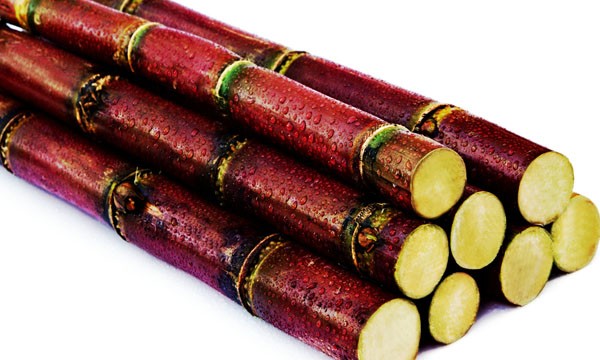
Sugar Cane Plant
$ 94.29
- Common name: Sugar Cane Botanical name: Saccharum officinarum Family: Poaceae Origin: Southeast Asia Avg. Height: 2 to 6 meters Sugar Cane Plant in a 3 Gallon Container. Sugar cane is a tall grass which looks rather like a bamboo cane. The cane plant is a coarse growing member of the grass family with juice or sap high in sugar content. This tropical plant is ready in 11-18 months. The mature stems may vary from 4 to 12 feet or more ill height, and in commercial varieties are from 0.75 to 2 inches in diameter. The stem has joints or nodes as in other grasses. Nice alternative to bamboo since it provides privacy and is edible. Sugar canes are extremely sweet. Uses Folk Medicine Chemistry Toxicity Description Distribution Ecology Cultivation Harvesting Yields and Economics Uses Cane sugar, cane syrup, molasses, wax, and rum are products of sugarcane. Molasses is used as a sweetener, in industrial alcohol, for explosives, synthetic rubber, and in combustion engines. Fresh cane stems are often chewed, especially by poorer people. Sugar is used as a preservative for fruits and meats; cane is also made into a liqueur. The young unexpanded inflorescence of 'tebu telur' is eaten raw, steamed or toasted, and prepared in various ways. Refuse cane (bagasse) is used in the manufacture of paper, cardboard, and fuel. The reeds are made into pens, mats, screens, and thatch. Sugar is a common adjunct to unpleasant medicines. Some races are considered magical and are used ceremoniously. The saw edge of the sugar cane leaf is used to scar the skin, in preparation of tatooing. A mixture of bagasse and molasses (Molascuit) is used as cattle feed. The ground and dried cane (after juice has been expressed) makes an excellent mulch and can be baled and shipped economically, because of its light weight. Folk Medicine Reported to be antidote, antiseptic, antivinous, bactericide, cardiotonic, demulcent, diuretic, intoxicant, laxative, pectoral, piscicide, refrigerant, and stomachic. It is a folk remedy for arthritis, bedsores, boils, cancer, colds, cough, diarrhea, dysentery, eyes, fever, hiccups, inflammation, laryngitis, opacity, penis, skin, sores, sore throat, spleen, tumors, and wounds (Duke and Wain, 1981). Powdered sugar is used as a 'drawing' agent for granulations and "proud flesh" (Hartwell, 1967–1971) and, in a 1:3 solution in water, for gonorrhea and vaginal discharges (Watt and Breyer-Brandwijk, 1962). The pulped sugar cane is used to dress wounds, and the cane for splints for broken bones; the Malay women use it in childbirth. A decoction of the root of the race of 'tebu lanjong' is used for whooping cough; and the cane juice is given for catarrh. It is used in elephant medicine; the juice is used to 'make an elephant sagacious', and in a poultice for sprains (Burkill, 1966). In India, the plant as well as its juices are used for abdominal tumors. chemistry Per 100 g, the inflorescence is reported to contain 25 calories, 91.0 g water, 4.6 g protein, 0.4 g fat, 3.0 g total carbohydrate, 1.0 g ash, 40 mg Ca, 80 mg P, 2.0 mg Fe, 0 mg b-carotene equivalent, 0.08 mg thiamine, 50 mg ascorbic acid. Per 100 g, the leaf is reported to contain 75 calories, 77.5 g water, 1.8 g protein, 0.8 g fat, 17.7 g total carbohydrate, 3.0 g fiber, 2.0 g ash; the stem, per 100 g, is reported to contain 62 calories, 82.5 g water, 0.6 g protein, 0.1 g fat, 16.5 g total carbohydrate, 3.1 g fiber, 0.3 g ash, 8 mg Ca, 6 mg P, 1.4 mg Fe, 0 mg b-carotene, 0.02 mg thiamine, 0.01 mg riboflavin, 0.10 mg niacin, 3 mg ascorbic acid (Duke and Atchley, 1984). Per 100 g, the hay is reported to contain, on a zero-moisture basis, 2.6 g protein, 1.2 g fat, 92.1 g total carbohydrate, 43.1 g fiber, 4.1 g ash, 3600 mg Ca (Miller, 1958). Toxicity The plant contains hydrocyanic acid. Sugarcane is a known teratogen; and is known to stimulate somatic mutations (aneuploidy and polyploidy) in plants (Lewis and Elvin-Lewis, 1977). Molasses, fed alone, or in large amounts with other feed, may produce diarrhea, colic, kidney irritation, urticaria, exanthema, leminitis, malanders, profuse sweating and paralysis, in domestic stock. Horses seem to be very susceptible, and 1.25 kg daily for 3 weeks, has proved fatal in some; unrefined sugar, also toxic to the horse, may prove lethal. Twenty to fifty percent of unrefined sugar added to oat produces skin swelling, weakness in the hind quarters, paralysis of the urinary bladder, weakness of the heart, and sometimes, death (Watt and Breyer-Brandwijk, 1962). Description Culms 3–5 m tall, 2–3 cm thick, solid juicy, the lower internodes short, swollen; sheaths greatly overlapping, the lower usually falling from the culms; blades elongate, mostly 4–6 cm wide, with a very thick midrib; panicle plumelike, 20–60 cm long, the slender racemes drooping; spikelets about 3 mm long, obscured in a basal tuft of silky hairs 2–3 times as long as the spikelet. Distribution Originated in the South Pacific Islands and New Guinea. Found throughout the tropics and subtropics. In the US it is cultivated from Florida to Texas. Sugarcane is cultivated as far as north as 36.7° (Spain) and as far south as 31° (South Africa) (Irvine, 1981). Ecology Ranging from Warm Temperate Dry to Moist through Tropical Very Dry to Wet Forest Life Zones, sugarcane is reported to tolerate annual precipitation of 4.7 to 42.9 dm (mean of 58 cases = 16.7), annual temperature of 16.0 to 29.9°C (mean of 58 cases = 23.7), and pH of 4.3 to 8.4 (mean of 49 cases = 6.3) (Duke, 1978, 1979). Occurs gregariously, growing in sunny areas, on soil unsuitable to trees; needs aeration at the roots and grows in sand but not loam, along sandy banks of rivers that change their course (Burkill, 1966). Requires a hot humid climate, alternating with dry periods, and thrives best at low elevations on flat or slightly sloping land, with stiff loamy or alluvial soil; however, it flourishes in any ordinary good soil, provided the necessary moisture is available (MacMillan, 1925). Sugarcane in commercial production has endured a maximum of 53°C (127°F) and a minimum of -13°C (9°F). The high is endured by standing cane and the low by overwintering stubble. Standing stalks of sugarcane freeze at -4 to -5.5°C (25 to 22°F) depending on cv and length of exposure. Sugarcane will survive and tiller at temperatures below 21°C but stem elongation, which occurs at night, is inhibited by lower temperatures. Saccharum tolerates occasional flooding. While the total water requirement of sugarcane is high, utilization efficiency is also high, with about 250 parts of water used for each part of dry matter produced. Cane is grown on volcanic soils of Hawaii, alluvial soils of Louisiana, muck soils of Florida, and on the bewildering variety of tropical soils in Puerto Rico. There are seven types of sugarcane-growing soils: (1) red soils, rich in iron and porous, but plastic when wet; (2) black soils with a clay subsoil, poorly drained; (3) black soils, with a calcareous subsoil, and highly productive; (4) brown clay loams with a stiff top soil, but responding well to fertilization; (5) alluvial soils of enduring fertility and easy cultivation; (6) sands and sandy loams of low fertility, well drained and of easy cultivation; and (7) soils of organic origin (Irvine, 1981). Cultivation Propagated by stem cuttings, but seed produced in the tropics assist in the production of cvs through hybridization. Lime in the soil is considered beneficial for the proper development of the sugar content of the canes. Manuring is indispensible as the crop is an exhausting one. It is generally grown for many years in the same ground, without rotation or rest. Harvesting Harvesting commences, according to the cv and climate, 12–20 months from time of planting, the canes becoming tough and turning pale yellow when ready for cutting. They are cut as close to the ground as possible, for the root end of the cane is the part richest in sugar. The rhizomes will continue to crop for at least 3–4 years, sometimes up to 8 or more years (MacMillan, 1925). Yield and economics Sugarcane is cultivated in all tropical and subtropical regions. In terms of biomass harvested (and transported), sugarcane is the world's largest crop with 691 million MT reported in 1977/78 (Irvine, 1981). In 1974, there were 592 million MT cane; 434 milk; 354, wheat; 324 corn, and 225 million MT rice in world production (Irvine, 1981). In 1976, sugar consumption in the US was almost 10 million tons (43 kg per capita) (Ricaud, 1980). In Louisiana alone, the 1976 crop was worth $86 million to the grower, and another $134 million at the processing, refining, and distribution levels. The theoretical maximum yield is 280 MT/ha/yr cane and seven countries average more than 100 (Colombia, Hawaii, Iran, Malawi, Peru, Rhodesia, and Swaziland). Australia, on small plots, has attained more than 75% of the theoretical maximum.
- Brand
- Need this Tool Customized?
Brand
LMT
Need This Tool Customized?
Every machining application is different. If this tool is close to what you need but not an exact fit, General Cutting Tools can help modify it for your specific job, machine, material, or production requirement.
We work with CNC shops, industrial manufacturers, tool rooms, and production facilities to provide tool modifications that improve fit, function, performance, and efficiency. Whether you need a small adjustment or a more specialized cutting tool solution, our team can review your requirements and recommend the best option.
Custom tool modifications can help reduce setup time, improve accuracy, extend tool life, solve clearance issues, and support more consistent production results.
Common Tool Customization Options
Diameter and OD Modifications
We can modify tool diameters to better match your application requirements, including cutting diameter changes, OD modifications, pilot diameter adjustments, step diameters, and shank diameter modifications.
Bore Modifications for Saw Blades
Custom saw blade bore modifications are available for hole diameter changes, pinholes, mounting holes, and keyway cutouts to help match your machine setup and cutting requirements.
Length Adjustments
Tools can be modified for specific reach, clearance, or setup needs. This may include overall length changes, flute length adjustments, reduced neck sections, extended reach designs, or shortened tools for improved rigidity.
Shank Modifications
Shank modifications can help ensure the tool fits properly in your holder, spindle, or machine setup. Common options include shank diameter changes, flats, Weldon flats, reduced shanks, and custom holding requirements.
Radius, Chamfer, and Corner Changes
We can customize corner radius, chamfer angles, edge breaks, and other profile details to meet part print requirements or improve cutting performance.
Step Tool Modifications
For applications that require multiple diameters or operations in a single tool, we can create or modify step tools to help reduce tool changes and improve production efficiency.
Flute and Cutting Edge Adjustments
Depending on the tool and application, flute length, cutting edge geometry, end cutting features, relief angles, and cutting edge shape may be modified to improve chip evacuation, cutting action, and tool performance.
Regrinding and Resharpening
Many cutting tools can be reground or resharpened to restore performance, extend tool life, and reduce replacement costs.
Custom Profiles and Special Forms
For unique part features, we can help provide special forms, custom profiles, custom radii, counterbores, countersinks, keyseat cutters, form tools, and other application-specific tooling solutions.
Material-Specific Tool Adjustments
We can help modify or recommend tooling based on the material being machined, including aluminum, brass, bronze, plastics, stainless steel, hardened steel, cast iron, composites, and other industrial materials.
Have a Drawing, Sample, or Part Print?
Send us your print, sketch, CAD file, photo, tool number, sample, or application details. For the fastest quote, include the material being cut, quantity needed, required dimensions, tolerances, and any machine or holder requirements.
Coating Options
Tool coatings can be selected or added to improve wear resistance, heat resistance, lubricity, and performance in specific materials such as steel, stainless steel, aluminum, cast iron, and high-temperature alloys.
Request a Custom Tool Modification
Need this tool changed for your application? Contact General Cutting Tools today to discuss your custom tooling needs. We can help you find the right solution for your machine, material, and production goals.
Related products
Adjustable Milling System
$ 4.59
Adjustable Milling System
$ 4.04
Adjustable Milling System
$ 2.60
Adjustable Milling System
$ 2.95
Adjustable Milling System
$ 10.66
Adjustable Milling System
$ 5.68
Adjustable Milling System
$ 3.14
Adjustable Milling System
$ 7.10