
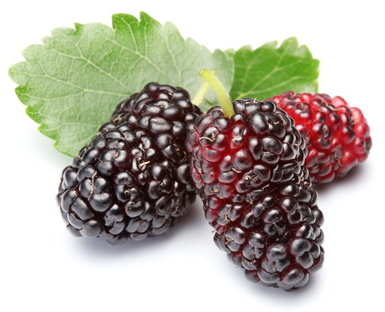
Mulberry Tree Everbearing Variety
$ 92.79
- Common name: Mulberry, Black Mulberry Botanical name: Morus nigra Family: Moraceae Origin Asia Avg. Height X Width: 15' x 15' Varieties: Everbearing, Giant, Pakistani, and White Season: Spring to summer, Everbearing produces throughout the year Mulberry Tree Everbearing Variety in a 3 Gallon Container. Mulberries taste similar to blackberries, and they will stain your hands and lips like black berries as well. They are excellent eaten right out of hand, but they are often used to preserves, jellies, and jams. The leaves of the mulberry are cultivated in many parts of the world as food for silk worms. Everbearing produces small fruit almost year round. Physical Characteristics Habitats Edible Uses Medicinal Uses Other Uses Cultivation Uses Propagation Physical Characteristics A decidious Tree growing to 10m by 15m at a slow rate. It is hardy to zone 5. It is in flower from May to June, and the seeds ripen from August to September. The flowers are monoecious (individual flowers are either male or female, but both sexes can be found on the same plant)The plant is self-fertile. The plant prefers light (sandy), medium (loamy) and heavy (clay) soils and requires well-drained soil. The plant prefers acid, neutral and basic (alkaline) soils. It can grow in semi-shade (light woodland) or no shade. It requires moist soil. It can tolerate atmospheric pollution. Habitats Woodland Garden; Canopy; Secondary; Sunny Edge; Dappled Shade; Cultivars: (as above except) 'Chelsea' 'Wellington' Edible Uses Edible Parts: Fruit. Fruit - raw, cooked or used in preserves. A delicious slightly acid flavour, it makes an excellent dessert fruit and can be eaten in quantity. The fruit is juicy and refreshing, though it must be used as soon as it is ripe (from mid-August to September) otherwise it will start to rot. The fruit falls from the tree as soon as it is fully ripe. It is best, therefore, to grow the tree in short grass to cushion the fall of the fruit but to still make it possible to find and harvest. The fruit can also be dried and ground into a powder. The fruit is up to 25mm in diameter. Medicinal Uses Anthelmintic; Astringent; Homeopathy; Hypoglycaemic; Laxative; Odontalgic; Purgative. The mulberry has a long history of medicinal use in Chinese medicine, almost all parts of the plant are used in one way or another. The white mulberry (M. alba) is normally used, but this species has the same properties. Recent research has shown improvements in elephantiasis when treated with leaf extract injections and in tetanus following oral doses of the sap mixed with sugar. Analgesic, emollient, sedative. The leaves are antibacterial, astringent, diaphoretic, hypoglycaemic, odontalgic and ophthalmic. They are taken internally in the treatment of colds, influenza, eye infections and nosebleeds. The leaves are collected after the first frosts of autumn and can be used fresh but are generally dried. The stems are antirheumatic, diuretic, hypotensive and pectoral. A tincture of the bark is used to relieve toothache. The branches are harvested in late spring or early summer and are dried for later use. The fruit has a tonic effect on kidney energy. It is used in the treatment of urinary incontinence, tinnitus, premature greying of the hair and constipation in the elderly. Its main use in herbal medicine is as a colouring and flavouring in other medicines. The root bark is antitussive, diuretic, expectorant and hypotensive. It is used internally in the treatment of asthma, coughs, bronchitis, oedema, hypertension and diabetes. The roots are harvested in the winter and dried for later use. The bark is anthelmintic and purgative, it is used to expel tape worms. Extracts of the plant have antibacterial and fungicidal activity. A homeopathic remedy is made from the leaves. It is used in the treatment of diabetes. Other Uses Dye; Fibre; Wood. A fibre used in weaving is obtained from the bark. A red-violet to dark purple dye is obtained from the fruit. A yellow-green dye is obtained from the leaves. Wood - used in joinery. Cultivation Uses Prefers a warm moist but well-drained loamy soil in a sheltered sunny position. Prefers a light soil. Plants are very tolerant of atmospheric pollution. Trees are hardy as far north as southern Sweden. A slow growing but very ornamental tree, the mulberry is sometimes cultivated in gardens for its delicious edible fruit. The tree is not grown on a commercial scale because the fruit is too soft and easily damaged to allow it to be transported to market, and is therefore best eaten straight from the tree. There are some named varieties. The mulberry takes many years to settle down and produce good crops of fruit, about 15 years being the norm. Trees fruit well in southern and south-western Britain but they require the protection of a wall further north if the fruit is to ripen. This is a good tree for growing grapes into. It means that the grapes are difficult to pick, but they always seem to be healthier and free from fungal diseases. Plants are late coming into leaf and also lose their leaves at the first autumn frosts though the tree in leaf casts quite a dense shade. Mulberries have brittle roots and so need to be handled with care when planting them out. Any pruning should only be carried out in the winter when the plant is fully dormant because mulberries bleed badly when cut. Ideally prune only badly placed branches and dead wood. Once considered to be a very long-lived tree, doubts are now being cast on this assumption, it is probably fairly short-lived. Plants in this genus are notably resistant to honey fungus. Propagation The seed germinates best if given 2 - 3 months cold stratification. Sow the seed as soon as it is ripe if possible, otherwise in February in a cold frame. The seed usually germinates in the first spring, though it sometimes takes another 12 months. Prick out the seedlings into individual pots when they are large enough to handle and grow them on in the cold frame for their first winter. Plant them out in late spring or early summer after the last expected frosts. Cuttings of half-ripe wood, 7 - 10cm with a heel, July/August in a frame. Plant out in spring. A good percentage take, though they sometimes fail to thrive. Cuttings of mature wood of the current season's growth, 25 - 30cm with a heel of 2 year old wood, autumn or early spring in a cold frame or a shady bed outside. Bury the cuttings to threequarters of their depth. It is said that cuttings of older wood up to 2.5 metres long can be readily made to strike. The cuttings are taken in February and planted 30cm deep in a shady sheltered position outdoors. The stem is wrapped in moss to prevent water loss by transpiration, with only the top few buds not being covered. Layering in autumn.
- Brand
- Need this Tool Customized?
Brand
LMT
Need This Tool Customized?
Every machining application is different. If this tool is close to what you need but not an exact fit, General Cutting Tools can help modify it for your specific job, machine, material, or production requirement.
We work with CNC shops, industrial manufacturers, tool rooms, and production facilities to provide tool modifications that improve fit, function, performance, and efficiency. Whether you need a small adjustment or a more specialized cutting tool solution, our team can review your requirements and recommend the best option.
Custom tool modifications can help reduce setup time, improve accuracy, extend tool life, solve clearance issues, and support more consistent production results.
Common Tool Customization Options
Diameter and OD Modifications
We can modify tool diameters to better match your application requirements, including cutting diameter changes, OD modifications, pilot diameter adjustments, step diameters, and shank diameter modifications.
Bore Modifications for Saw Blades
Custom saw blade bore modifications are available for hole diameter changes, pinholes, mounting holes, and keyway cutouts to help match your machine setup and cutting requirements.
Length Adjustments
Tools can be modified for specific reach, clearance, or setup needs. This may include overall length changes, flute length adjustments, reduced neck sections, extended reach designs, or shortened tools for improved rigidity.
Shank Modifications
Shank modifications can help ensure the tool fits properly in your holder, spindle, or machine setup. Common options include shank diameter changes, flats, Weldon flats, reduced shanks, and custom holding requirements.
Radius, Chamfer, and Corner Changes
We can customize corner radius, chamfer angles, edge breaks, and other profile details to meet part print requirements or improve cutting performance.
Step Tool Modifications
For applications that require multiple diameters or operations in a single tool, we can create or modify step tools to help reduce tool changes and improve production efficiency.
Flute and Cutting Edge Adjustments
Depending on the tool and application, flute length, cutting edge geometry, end cutting features, relief angles, and cutting edge shape may be modified to improve chip evacuation, cutting action, and tool performance.
Regrinding and Resharpening
Many cutting tools can be reground or resharpened to restore performance, extend tool life, and reduce replacement costs.
Custom Profiles and Special Forms
For unique part features, we can help provide special forms, custom profiles, custom radii, counterbores, countersinks, keyseat cutters, form tools, and other application-specific tooling solutions.
Material-Specific Tool Adjustments
We can help modify or recommend tooling based on the material being machined, including aluminum, brass, bronze, plastics, stainless steel, hardened steel, cast iron, composites, and other industrial materials.
Have a Drawing, Sample, or Part Print?
Send us your print, sketch, CAD file, photo, tool number, sample, or application details. For the fastest quote, include the material being cut, quantity needed, required dimensions, tolerances, and any machine or holder requirements.
Coating Options
Tool coatings can be selected or added to improve wear resistance, heat resistance, lubricity, and performance in specific materials such as steel, stainless steel, aluminum, cast iron, and high-temperature alloys.
Request a Custom Tool Modification
Need this tool changed for your application? Contact General Cutting Tools today to discuss your custom tooling needs. We can help you find the right solution for your machine, material, and production goals.
Related products
Adjustable Milling System
$ 2.60
Adjustable Milling System
$ 2.95
Adjustable Milling System
$ 4.24
Adjustable Milling System
$ 3.28
Adjustable Milling System
$ 10.66
Adjustable Milling System
$ 2.24
Adjustable Milling System
$ 4.10
Adjustable Milling System
$ 5.68